

RVing on a Budget: 2026 Trends in Cost-Effective Adventure

Updated: Mar 29
According to 2026 RVing industry forecasts and owner trends, RVers with a budget mindset are focused on adopting technology for off-grid adventure travel, managing rising costs, and pursuing a better-connected, cost-effective adventurous lifestyle. Examples include using app-controlled systems to monitor tank levels and climate, and using memberships like Harvest Hosts for cost-effective campground stays.

Below are the leading topics of interest for RV owners:
1. Off-Grid Capability & Power Upgrades
Solar and Lithium Systems: Many RVers are upgrading to solar panels, high-capacity lithium batteries, and inverters for extended off-grid travel. Renogy and Battle Born are popular brands for reliability and efficiency. Installation costs range from $360 to $2,000, depending on RV type and system size.
DIY kits can save money for those comfortable with basic electrical work and the right tools. Key steps in a DIY solar panel installation include assessing the RV's roof space for panel placement, securely mounting the panels, routing wiring to the charge controller, and connecting batteries and an inverter. Safety checks involve ensuring all connections are secure and testing the system for proper functionality.
Professional installation is recommended for anyone who is not confident in their skills, as incorrect installation can cause malfunctions or safety hazards.
Owners should assess their skills and equipment before choosing a DIY approach.
Starlink Internet: Reliable internet is essential for remote glamping, making Starlink a key solution for staying connected in off-grid locations (Starlink Internet Service, 2024 Review).
Energy Management: As more appliances run on 12V and advanced power systems, effective battery and energy management is increasingly important (LiTime, 2025).
2. Rising Costs & Budgeting (Value-Driven Travel)
Campground Costs: With site fees ranging from $90 to $150 per night in popular areas, RVers seek savings through memberships such as Harvest Hosts, Boondockers Welcome, and Passport America. These memberships can save $20 to $50 per night and up to $500 annually, depending on usage.
Each membership has specific restrictions, so reviewing terms is important for trip planning.
Harvest Hosts appeals to those who enjoy unique stays at wineries, farms, and museums, making it ideal for adventurous travelers seeking non-traditional campgrounds.
Boondockers Welcome offers access to private property locations, suited for those who prioritize off-the-beaten-path experiences.
Passport America provides access to a wider network of traditional RV parks with substantial discounts, appealing to budget-minded travelers who stay in multiple regions.
To summarize: Harvest Hosts is best for adventurous travelers, Boondockers Welcome suits those seeking secluded stays, and Passport America is excellent for travelers across various regions focused on affordability (The 2026 RV Membership Economics Report: Break-Even Analysis & Hidden Cost Data, 2026).
Fuel and Maintenance: RVers are actively seeking ways to reduce travel costs by finding affordable fuel and performing DIY maintenance.
With many pandemic-era units entering the market, buying used RVs is more common. (Used RV Prices Have Crashed In 2026 - Is It Time To Buy?, 2026).
Buyers should be aware of the '10-year rules' at some parks and inspect for hidden damage.
Essential steps include checking roofs and seams for leaks, inspecting tires, and verifying that appliances and electrical systems work. Reviewing maintenance records can reveal undisclosed issues. Detailed inspection checklists are available online, often including testing brakes, evaluating the water system for leaks, and checking the interior for mold or water damage. Using these checklists helps buyers avoid costly mistakes.

The '10-year rule' restricts or prohibits RVs older than 10 years at certain parks (What is the RV 10-Year Rule?, 2024). Calling ahead to confirm park policies is recommended.
3. Smart & Functional Technology
App-Controlled Systems: New RVs offer smart technology that enables users to monitor tanks, adjust climate, and manage power through smartphone apps.
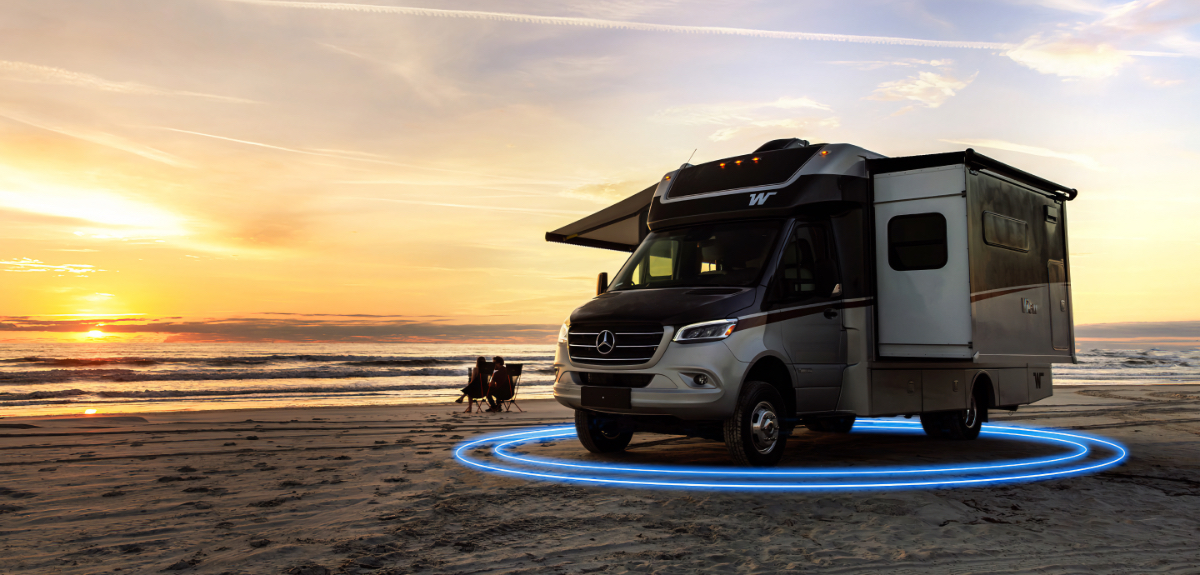
Safety Technology: Upgrades such as Tire Pressure Monitoring Systems (TPMS), Blind Spot Monitoring, and Automatic Emergency Braking (AEB) are increasingly popular. These systems, generally costing $100 to $500, help prevent incidents and boost travel safety (Costs of Safety Technologies, n.d.). TPMS and Blind Spot Monitoring systems are usually easy for most owners to install by following the manufacturer's guidelines. Automatic Emergency Braking systems may require professional installation due to their complexity. Many kits include detailed instructions and support for DIY users.
"Hot Skin" Prevention: Grounding Monitor Interrupters (GMI) are being considered to prevent electrified exteriors caused by faulty campground pedestals. RVers can use a non-contact voltage detector to test for 'hot skin.' If the tester lights up or a tingling sensation is felt when touching metal components, immediate attention is required. In such cases, immediately disconnect the power source and contact campground staff to prevent any potential hazards. Proactive detection ensures safety and improves the RV experience.
4. Lifestyle & Comfort Upgrades
Interior Upgrades: RV owners are improving comfort by replacing stock mattresses and adding portable air fryers. Replacing stock mattresses often provides the biggest comfort boost, offering a restful night's sleep, which is key for long travel days. Installing compact washers and dryers also improves convenience and livability.
Space Management: Families are focused on making the most of space and privacy, especially when working or schooling while traveling.

Outdoor Living: RVers are upgrading outdoor spaces with improved lighting, outdoor kitchens, and upgraded awning systems (Outdoor Kitchen Kit Trends for 2026: Smart Appliances, Modular Concrete, Covered Structures, 2025).
5. Emerging Trends for 2026
Electric Vehicles (EVs): As EVs become more common in the RV market, demand for campground charging stations is increasing. Campgrounds such as Yosemite Pine RV Resort in California and Normandy Farms in Massachusetts now offer EV charging facilities (Electric Vehicle (EV) Charging - Yosemite National Park, 2026). These additions support travel planning and highlight the growing need for EV-friendly accommodations.
The transition to EV RVs offers both benefits and challenges. EV RVs support eco-friendly travel and can lower fuel costs, but buyers ought to consider range limitations, typically 200 to 300 miles per charge, and variable charging times (Electric RV Cost Breakdown: Purchase, Operating & Maintenance (2026). Careful route planning is necessary to account for charging station availability. Prospective owners should examine these factors against their budget and travel preferences.

For instance, our friends Jane and Tom, avid travelers, shared their story with us of traveling across the Pacific Northwest in their EV RV. They highlighted the importance of planning around the limited range, noting that their route included multiple scenic stops to coincide with charging needs, making the experience both enjoyable and efficient.
"Rugged" Small Rigs: There is a growing trend toward smaller, more rugged towables, such as teardrops, which offer easier access to remote locations (Worldwide Teardrop Trailer Market Research Report 2025, Forecast to 2031, n.d).
Hybrid Campgrounds: More campgrounds are featuring a combination of traditional RV sites and glamping units, including tiny homes and cabins (Trends in the U.S. RV Park and Resort Sector for 2025–2026, 2025).
In essence, the future of the RV lifestyle in 2026 represents a pragmatic yet aspirational blend of technology adoption and a return to core values of independence and cost-effectiveness. Leveraging smart, app-controlled luxury and cost-effective, curated experiences like Harvest Hosts, modern glampers are shifting from passive observers to active, connected curators of their own unique, immersive journeys.
Happy Glamping!
Thanks for stopping by! This post may contain affiliate links, meaning we get a small commission if you purchase through them—at no extra cost to you. These partnerships help keep the site running, and we appreciate your support! For more information, check out our full disclaimer.


Comments